Thursday, November 5, 2015

The Murky Waters of USACE Dredging


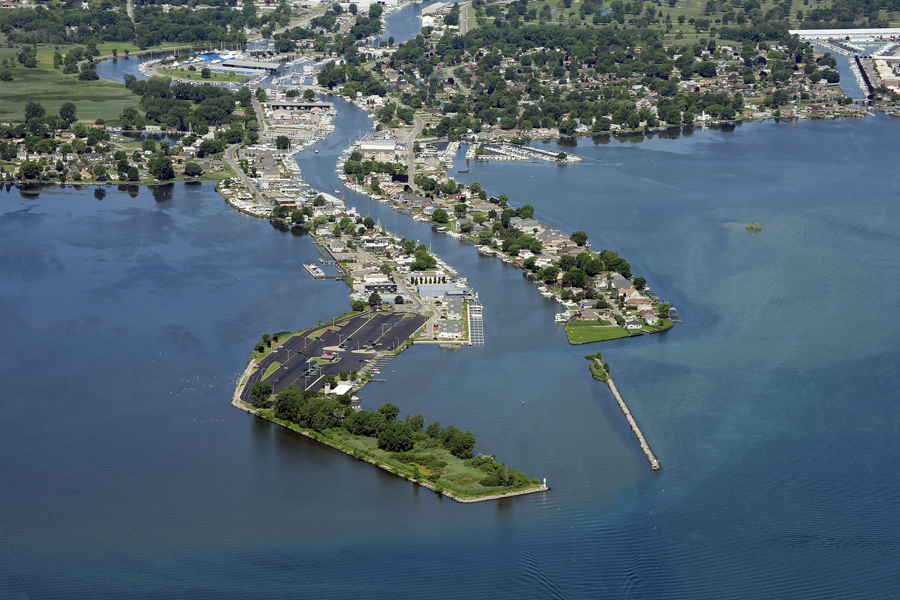
USACE photo - Mouth of the Clinton River on Lake St. Clair

  -- the first in a series --

Every few years, the U.S. Army Corps of Engineers (USACE or the Corps) arranges to dredge channels in the mouths of rivers entering international waters in southeast Michigan to remove accumulated sediments that interfere with navigation.

Two examples are the Clinton River and the River Rouge.

Over several months in 2009-2010, a Corps contractor removed 17,454 cubic yards of sediment from the mouth of the Clinton River, generally to a depth of eight feet, at a cost of $338,413.

In August 2012, the River Rouge navigation channel was dredged to a depth of 21 feet.  It cost $363,886 to remove 39,951 cubic yards.  

In both instances, the dredgings were deposited in confined (land-based) disposal facilities.

The Clinton and Rouge dredging projects are dwarfed by those in Cleveland and Toledo, but all are subject to similar conflicts between commercial, public health and environmental interests.  

Many such projects are affected by Corps machinations to utilize open-water (lake) dumping of dredged sediments, instead of confined or land-based disposal.  Open-water disposal is simpler, faster and cheaper (cheaper if you disregard the environmental consequences and risks to public health).

    Cleveland      

When sediment contains toxins and other pollutants, the question of how best to dispose of the contaminated dredgings arises.

Public concerns have re-emerged this past year in Cleveland and Toledo about dumping contaminated sediments from river channels into Lake Erie.

In Cleveland, the Corps proposed to dredge the six-mile Cuyahoga River navigation channel and dump the dredged sediments in the lake.

The State of Ohio objected to open-lake disposal because the sediments, especially in the last mile upstream, were heavily contaminated with toxins, including polychlorinated biphenyl (PCB), from steel production years before.  The state maintained that open-lake dumping would create a public health hazard.

Although Congress had authorized enough money for confined (on-land) disposal, USACE insisted that some other party, apparently meaning the State of Ohio, pay for the more expensive confined disposal of sediments dredged from the sixth mile upstream.  

Ohio refused and sought relief in federal court.  This past May, the judge agreed with the state, ordering the Corps to dredge the six-mile channel, place all of the sediment in a confined disposal site and absorb the cost.

USACE may be down but it’s not out.  It has at least one more trick up its sleeve to re-establish open-water dumping, if not off Cleveland, then perhaps everywhere else.

*****

Next in this series, we’ll look at Toledo, the 900 pound gorilla in the zoo of Great Lakes dredging.

The series will conclude with an analysis of a Corps “experiment,” the underwater equivalent of a Rube Goldberg contraption.  Junk science at its best!

*****     *****     *****

Saturday, October 17, 2015

Update: Ten Mile Drain Superfund Site


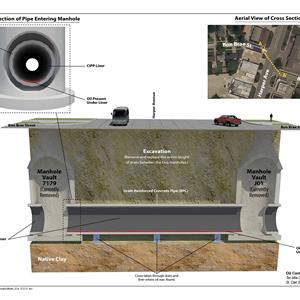
The U.S. Environmental Protection Agency (EPA) announced recently that Harper Avenue between Bon Brae Street and Lakeland Street in St.Clair Shores, Michigan will be closed from mid-October to mid-November in order to remove contaminated sewer pipe, liner and backfill underlying Harper Avenue.  Work in the area is expected to be completed by mid-December.

The Harper Avenue project is part of EPA’s Ten Mile Drain Superfund Site cleanup.  In 2002, polychlorinated biphenyl (PCB), a toxic, synthetic chemical compound once added to oil for use as an electrical insulator and coolant, was discovered in two nearby canals leading to Lake St. Clair.  
The contamination was thought to have come from the stormwater sewer system in the vicinity of Ten Mile Road.  The canals were dredged by EPA contractors in 2003.  However, in 2005 local officials determined that contamination was ongoing.  Dozens of soil samples were taken, and a portion of the sewer was lined to prevent PCB from leaking into the system.
More sediment contaminated with PCB-laden oil was removed from the sewers in 2008 and 2009. Numerous weirs were installed to trap toxic sediment and identify the point of entry.

In 2011, another cleanup plan was initiated.  The contamination was traced to two manhole vaults, which were replaced in 2014.

“While cutting back the liner inside a 48-inch reinforced concrete pipe beneath Harper Avenue recently, workers found that PCB-contaminated oil was flowing out of the end of the pipe between the liner and the pipe’s inside wall. EPA believes this is a source of PCBs to the rest of the Ten-Mile Drain system, and the Lange and Revere Street canals. Agency investigators have found high concentrations of PCBs near manhole vaults [previously replaced] which are at each end of the pipe beneath Harper Avenue.”  https://www.facebook.com/295047901913/posts/10153177630436914

https://www.google.com/maps/@42.4813429,-82.9025096,15z


*****     *****     *****
AOC Meeting Announcement
The United States Environmental Protection Agency will be hosting the 2016 Areas of Concern Annual meeting for Tuesday and Wednesday, March 2-3 at the University of Michigan at Dearborn MI. Mark your calendars, reserve this date and spread the word to all who may be interested in attending.
Contact: John Perrecone, 312/353-1149, Perrecone.john@epa.gov

Sunday, October 11, 2015

What’s Wrong with Our Rivers? Beneficial Use Impairments


“The International Joint Commission is an independent binational organization established by the United States and Canada under the Boundary Waters Treaty of 1909….The purpose of the Commission is to help prevent and resolve disputes about the use and quality of boundary waters and to advise Canada and the United States on questions about water resources.” https://en.wikipedia.org/wiki/International_Joint_Commission
IJC has labeled bodies of water and their surroundings in the Great Lakes region which exhibit extreme environmental degradation as Areas of Concern (AOCs) in need of remediation.
[The following italicized text has been reduced by approximately 40% through editing.  The unedited text is at: http://ijc.org/en_/aoc/Desc_Impairments#sthash.swp26Pc0.dpuf ]
The 43 AOCs around the Great Lakes are the most polluted areas in the basin.  Many of the  qualities and activities which people enjoy in these waters are impaired.  The Great Lakes Water Quality Agreement focuses on 14 Beneficial Use Impairments (BUI) described below.  At least one applies to each AOC.
  1. Restrictions on fish and wildlife consumption as a result of public health advisories about contaminants like mercury or polychlorinated biphenyl (PCBs) in the fish or wildlife.
  2. Tainting of fish and wildlife flavor because water quality is poor, for example, by reason of excessive algae in the water.
  3. Degradation of fish and wildlife populations caused by enough toxicity in the water or sediments to interfere with reproduction and growth.
  4. Fish tumors or other deformities exceeding rates at comparable (but unpolluted) sites.
  5. Bird or animal deformities or reproductive problems, such as cross-bill syndrome or egg-shell thinning, revealed by wildlife surveys.
  6. Degradation of benthos as occurs when the community structure of sediment-dwelling aquatic insects significantly diverges from unpolluted sites of similar physical and chemical characteristics.  In benthos degraded by pollution, community structure is skewed towards insects that are  tolerant of poor water quality, and away from insects that require good water quality.
  7. Restrictions on dredging activities, i. e. when contaminants in sediments exceed standards for the least restrictive disposal method, often open water disposal.
  8. Eutrophication or excessive algae attributed to excessive nutrient discharges from point (end-of-pipe) or nonpoint (diffuse land uses) sources.  Typically, the impairment manifests itself as nuisance or harmful algal blooms, dissolved oxygen depletion in bottom waters, and decreased water clarity.
  9. Restrictions on treated drinking water, as when contaminants still exceed human health standards, taste and odor problems are present, or additional treatment is necessary  beyond the standard in comparable locations free of offensive characteristics.
  10. Beach closings required when bacterial concentrations in water commonly used for recreation, such as swimming and other water activities, exceed applicable standards.  
  11. Degradation of aesthetics, as when a substance in the water produces an objectionable deposit, unnatural color or odor.  Examples include an oil slick or surface scum.
  12. Added costs to agriculture or industry, such as additional treatment for livestock watering, crop irrigation, and noncontact food processing.
  13. Degradation of phytoplankton (microscopic plant) and zooplankton (microscopic animal) populations reflected by community structure significantly diverging from the physical and chemical characteristics of similar but unpolluted sites.
  14. Loss of fish and wildlife habitat, most commonly diminished riparian (shoreline) vegetation, coastal wetlands, or underwater fish habitat.
There are criteria to measure remediation of individual BUIs in each AOC, known as delisting criteria (sometimes numeric, sometimes narrative).  A template of delisting criteria was developed by the IJC for individual AOC committees to adapt for their own specific use, which can be found here. Several U.S. States have developed delisting criteria guidance for AOCs in their jurisdictions – see Additional Information for links to those documents.
*****     *****     *****
Beneficial Use Impairments in the Clinton River AOC:

  • Restrictions on fish and wildlife consumption
  • Eutrophication or undesirable algae
  • Degradation of fish and wildlife populations
  • Beach closings
  • Degradation of aesthetics
  • Degradation of benthos
  • Restriction on dredging activities
  • Loss of fish and wildlife habitat

Beneficial Use Impairments in the River Rouge AOC:

  • Restrictions on fish and wildlife consumption
  • Eutrophication or undesirable algae
  • Degradation of fish and wildlife populations
  • Beach closings
  • Fish tumors or other deformities
  • Degradation of aesthetics
  • Degradation of benthos
  • Restriction on dredging activities
  • Loss of fish and wildlife habitat
http://www2.epa.gov/rouge-river-aoc/about-rouge-river-aoc

Sunday, October 4, 2015

MACOMB DAILY Examines Future Water Costs

An article in the Macomb Daily by Norb Franz on September 28, 2015 about the cost of overdue water infrastructure upgrades is noteworthy.  Data in the accompanying graphic are especially revealing   Under the title “Billions needed to keep water systems working,” Franz wrote (excerpts):

Around the country, scores of decaying drinking water systems built around the time of World War II and earlier are in need of replacement. The costs to rebuild them will be staggering.

But without big changes in national policy, local governments and their ratepayers will be largely on their own in paying for the upgrades. The amount of federal money available is a drop in the bucket.

The U.S. Environmental Protection Agency projects it will cost $384 billion over 20 years just to maintain the nation’s existing drinking water infrastructure. Replacing pipes, treatment plants and other infrastructure as well as expanding drinking water systems to handle population growth could cost as much as $1 trillion.

New Orleans once boasted about not raising water rates for two decades. But in 2012, the city approved 10 percent increases on water bills for eight straight years as part of a plan to fix its crumbling system. The average household’s monthly water-and-sewer bill will climb to $115 by 2020.

Michigan ranks 27th in per capita federal spending for capital improvement projects for water. The state ranks 9th in projected money needed over 20 years at $13.8 billion…

Locally, the city of Mount Clemens, which operates its own water filtration plant and a waste water treatment plant, has borrowed $16.6 million to finance water system improvements. The last time was 2007, when $3.9 million was used for various upgrades, including an ozone system.

On the waste water side, Mount Clemens has borrowed $22 million. Nearly one-third is still to be paid off. That includes $1.19 million in 2010 from the State Revolving Fund for an ultraviolent light treatment system that cuts down on the use of chemicals. The city of Warren made the same improvement years ago.

There’s much, much more of interest in Franz’s piece, as well as the graphic.

Tuesday, September 22, 2015

Septic Systems and Water Quality

September 21-25  is the U.S. Environmental Protection Agency’s Third Annual SepticSmart Week.

During SepticSmart Week, EPA seeks to inform homeowners on proper septic system care and maintenance, assist local agencies in promoting homeowner education and awareness, and educate local decision makers about the infrastructure options available to improve and sustain their communities.


The Michigan Department of Environmental Quality (MDEQ) quotes a Rouge River Wet Weather Demonstration Project document to explain septic systems: (excerpts)

Septic systems are waste water treatment systems that use septic tanks and drainfields to dispose of sewage. They are typically used in rural or large lot settings where a sanitary sewer is not available...

A septic system usually is made up of a septic tank and a drain field. The septic tank is usually made of reinforced concrete, is buried and watertight. This tank receives untreated household waste. The drain field consists of a series of perforated pipes (pipes with holes in them), which distribute the liquid from the septic tank to the surrounding soil.

Although even the best designed and installed system will eventually fail, proper maintenance will ensure a longer lasting waste disposal system…

When waste enters the tank, bacteria begin to break down the solid materials. This break down reduces solids, but also leaves a residue behind in the tank. As time passes, this residue builds up, and must be removed to prevent it from entering the drainfield and clogging the system. The center liquid layer flows slowly from the tank into the drainage field. Perforated pipes allow the liquid to be equally distributed in a gravel-filled disposal field. Once the liquid reaches the disposal field, it soaks into the soil. The soil then acts as the final filter for treatment of waste received from the septic system.

Onsite sewage disposal (septic) systems are common in southeast Michigan. In Oakland County, for example, there are more than 80,000 such systems.

According to the Oakland County Health Division, “...proper disposal of solid, liquid and sewage wastes is crucial to prevent contamination to the land and the groundwater below. The use of sewers and municipal sewage treatment plants is limited to areas where infrastructure exists. On-site sewage disposal is the only viable alternative in areas not serviced by municipal sewers.”

The Health Division’s Environmental Health Services Unit issues “...permits and conducts construction and final inspections for the installation of residential and non residential on-site sewage disposal systems…”

https://www.oakgov.com/health/services/Pages/Septic.aspx

Tuesday, September 15, 2015

GLWA and DWSD Accountability

The Great Lakes Water Authority and its largest wholesale customer, the Detroit Water and Sewerage Department, presently are accountable only to a federal judge. But they need to be fully accountable to their ratepayers and the general public.

First, the GLWA and DWSD boards should be taking steps to facilitate the transition from disclosure of records pursuant to the Freedom of Information Act (FOIA) to Open Government or Open Data, whereby the government and parties acting on its behalf make public information (with very few exceptions) available proactively and put that information within reach of the public (online), without barriers for its reuse and consumption.

Second, the boards’ various constituencies (the other wholesale customer groups, for example) ought to be challenging the U.S. District Court gag order that prevents public disclosure of ongoing negotiations between GLWA and DWSD and, generally, any information even remotely related to those negotiations.

Last but certainly not least, citizens, the media, communities and their wholesale organizations should demand that the Michigan Legislature provide for the democratic election of GLWA board members.

Neither social media nor traditional mass media have done much to engage the public in these issues.  One can only wonder why.

Thursday, September 10, 2015

Stormwater Summit; Contaminated Sites; Invasive Mussels

2015 Stormwater Summit

“Oakland County Water Resources Commissioner Jim Nash and his office, along with Pure Oakland Water and Lawrence Technological University, are hosting the third annual Regional Stormwater Summit on October 9, 2015.”

“Elected officials, government staff, industry leaders, engineers, environmentalists, and community members interested in sustainability, green infrastructure, keeping our waters clean, cutting edge projects and related environmental concerns are encouraged to attend.”

“Attendance is limited to the first 300 registrants. Cost to attend is only $20 and includes a light breakfast, box lunch, and beverages.”

Questions? Email or call Alyssa Atkinson:   atkinsonaa@oakgov.com or call 248-858-0967.  

Remediation of Contaminated Sites

There are significant changes to regulations for remediation of contaminated sites in Michigan. DEQ's Remediation and Redevelopment Division is presenting three Environmental Remediation and Risk Management Conferences.  Attendees will hear about how changes to Part 201 and Part 213 have created opportunities for cost effective remediation solutions.

The dates and places are October 1 in Novi, October 7 in Traverse City and October 14 in Grand Rapids.


The conferences will address the new Water Strategy and the importance of cleaning up contaminated sites for future generations.

DEQ's Remediation and Redevelopment staff will give updates on RCRA/Part 111 Corrective Action, Michigan’s Role in the TSCA PCB Remediation Program, Land and Resource Use Restrictions Overview, No Further Action and Redevelopment, Brownfields - Solving Technical Issues, and more.

Invasive Mussels


The Invasive Mussel Collaborative is offering a new listserv developed to promote communication among stakeholders engaged in zebra and quagga mussel management, control, research or related efforts. This new service began September 1.

“This listserv will be a forum for sharing information about invasive mussel control, research and management.  Appropriate postings include management strategies, field study results, permitting information, policy issues, research, etc. This list will also receive information from the Invasive Mussel Collaborative (http://www.invasivemusselcollaborative.net), including webinar announcements and other relevant information.”
 https://glc-lists.merit.edu/sympa/info/invasivemussels